


A vibro sifter has six main parts: a vibratory motor with eccentric weights that creates the motion, a base that holds it, springs or rubber mounts that isolate the vibration, one or more screen decks (mesh, frame ring, gasket and clamp) that separate the material, a lid with an inlet, and discharge outlets for each size fraction. Ball trays and magnet grills are common add-ons.
Knowing what each part does makes it easier to compare quotations, train operators and keep the right spares. This guide walks through every part of a round gyratory vibro sifter, using photos from the JS Vibro factory in Vadodara. If you are buying, see our vibro sifter machine manufacturer page for sizes, models and prices.
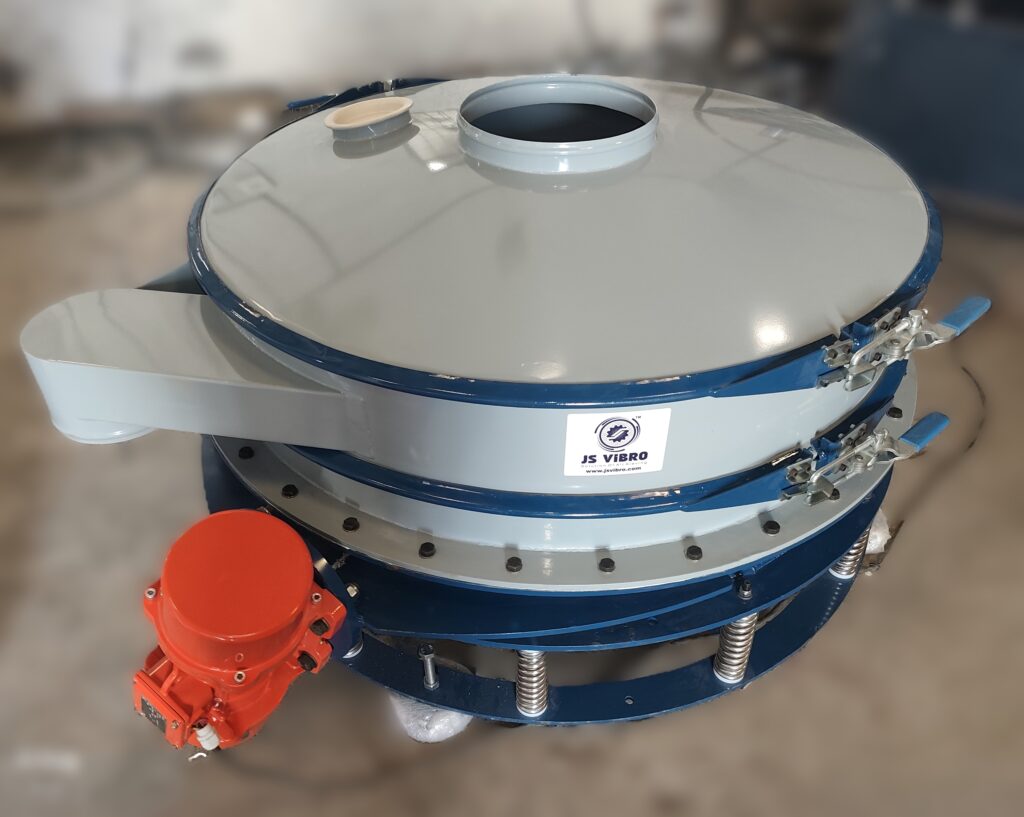
Vibro sifter parts at a glance
| Part | What it does | Usual material |
|---|---|---|
| Vibratory motor | Creates the gyratory motion through eccentric weights | Motor with steel weights |
| Base | Holds the motor and carries the screen body | MS painted or SS |
| Springs / rubber mounts | Let the body vibrate and isolate the floor | Spring steel or rubber |
| Screen (mesh + frame ring) | Separates particles by size | SS 304 / SS 316 mesh |
| Gasket | Seals each deck so no dust or product leaks | Silicone or rubber |
| Clamp band | Holds the deck stack together | SS |
| Lid and inlet | Closes the top and guides feed onto the screen | SS 304 / SS 316 |
| Outlets (spouts) | Discharge each size fraction | SS 304 / SS 316 |
| Ball tray (option) | Keeps the mesh from blinding | SS tray, rubber or silicone balls |
| Magnet grill (option) | Catches iron particles at the outlet | SS with magnets |
1. Vibratory motor and eccentric weights
The heart of the machine is a vertical vibratory motor mounted in the centre of the base. It carries an eccentric weight at the top and another at the bottom of its shaft. The top weight makes the screen move in a horizontal circle, spreading the feed across the mesh. The bottom weight tilts the screen, adding vertical and tangential motion that turns the material over and moves it towards the outlets.
The angle between the two weights, called the lead angle, controls the path the material takes: a small angle sends it straight out, a larger one makes it spiral for longer on the screen. Our technical overview of how a vibro sifter works explains this motion in detail.
2. Base, springs and rubber mounts
The base houses the motor and sits on the floor. Between the base and the screen body are springs or rubber mounts. They let the screen body vibrate freely while stopping most of the vibration from reaching the floor, the structure and nearby machines. Worn mounts are a common cause of noise and cracked welds; see how to minimise vibrations of a vibro sifter.
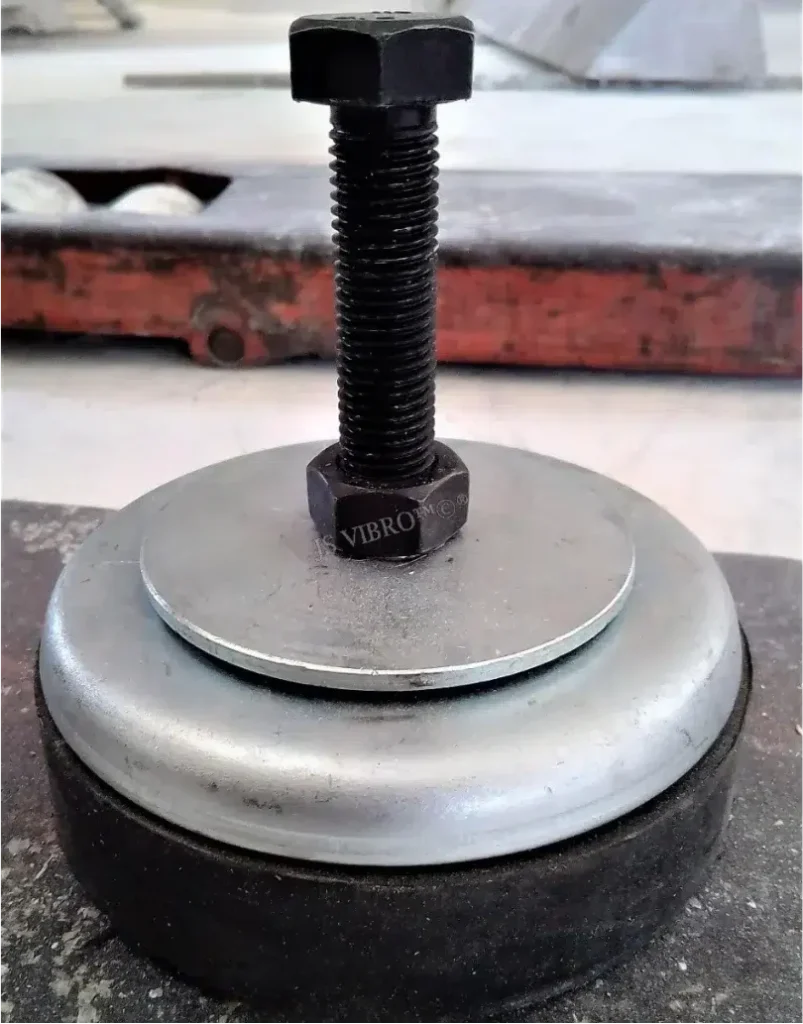
For sifters that move between rooms or lines, castor wheels can be fitted to the base.
3. Screen deck: mesh, frame ring, gasket and clamp
Each deck is a stack of parts that work together:
- Mesh: woven stainless steel wire that does the actual separation. The opening size decides what passes through; see how to choose the right mesh size.
- Frame ring: the stainless steel ring the mesh is stretched and fixed to, so it stays tight under vibration.
- Gasket: a silicone or rubber seal between rings that stops dust and product leaking out.
- Clamp band: a quick-release clamp that holds the deck stack together and lets operators open it in minutes for cleaning or a mesh change.
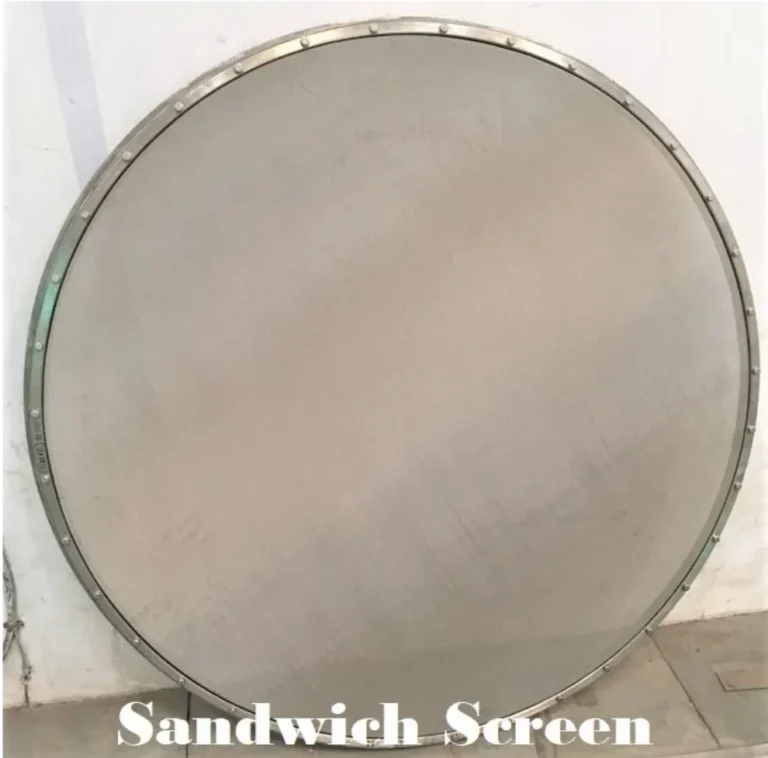
A sifter can carry one, two or three decks, giving up to four size fractions. Compare the options in single deck vs multi-deck vibro sifters.
4. Lid, inlet and top deck
The lid closes the top of the machine and carries the inlet, where product is fed in from a hopper, chute or conveyor. A flexible sleeve or rubber bellow usually connects the inlet to the feed pipe so the vibration is not passed up the line. The top deck ring has its own outlet spout for oversize material.
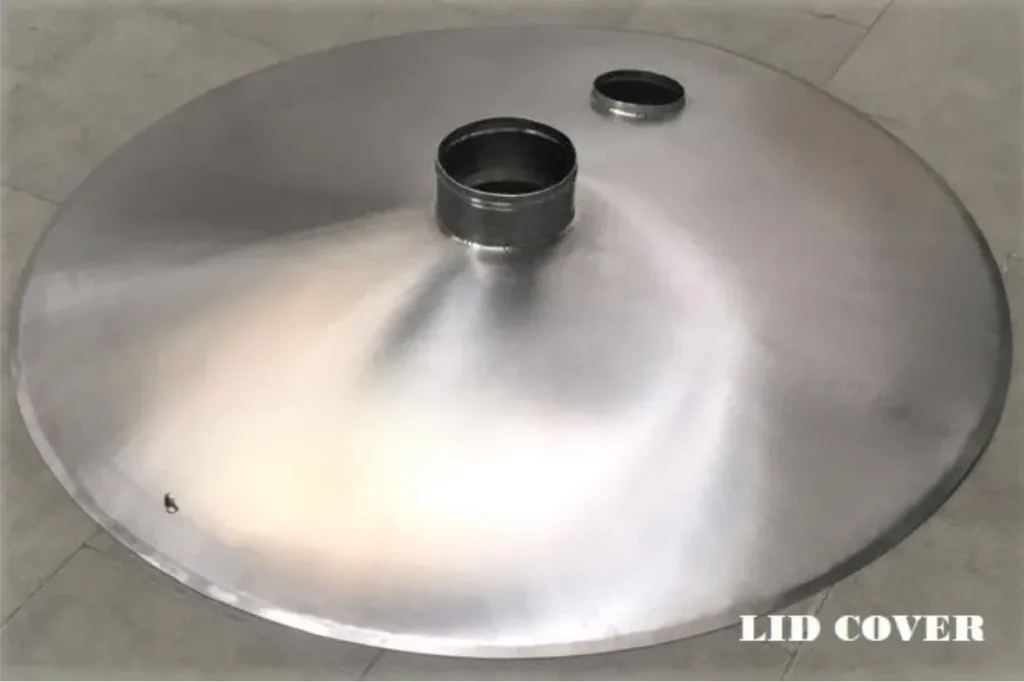
5. Outlets and bottom deck
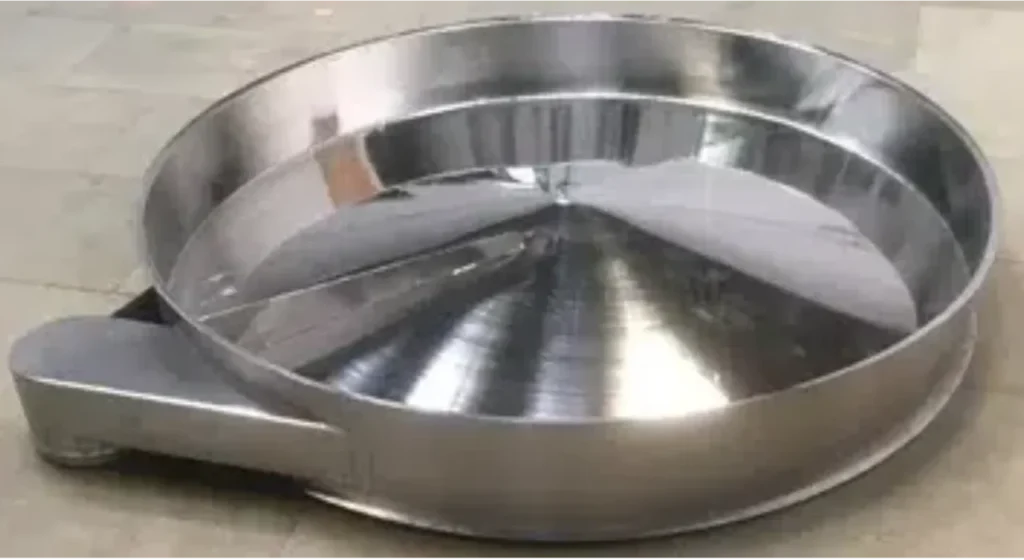
Every deck has a discharge spout at its edge. Oversize particles that cannot pass the mesh travel to that spout; fines that pass all the meshes collect in the bottom deck and leave through its spout. Transfer chutes guide each fraction into bags, bins or the next machine.
6. Ball tray (anti-blinding option)
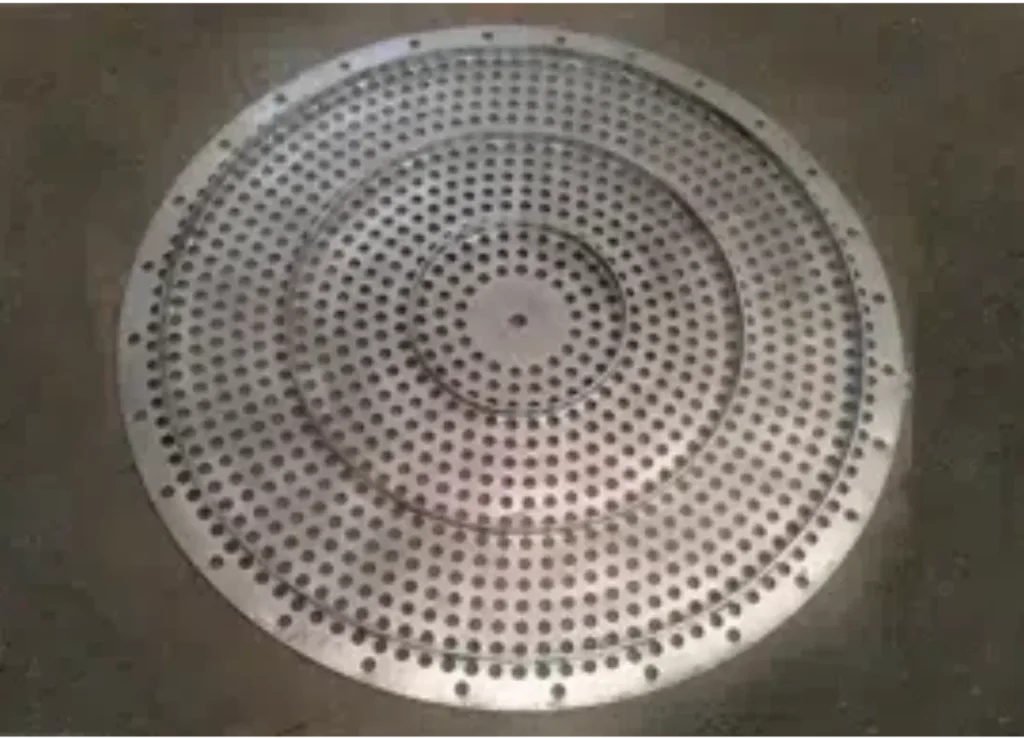
Fine, sticky or near-size powders can plug the mesh, a problem called blinding. A perforated tray fitted under the mesh holds rubber or silicone balls. As the sifter vibrates, the balls bounce against the underside of the mesh and knock out trapped particles, keeping the open area clear.
7. Magnet grill (option)
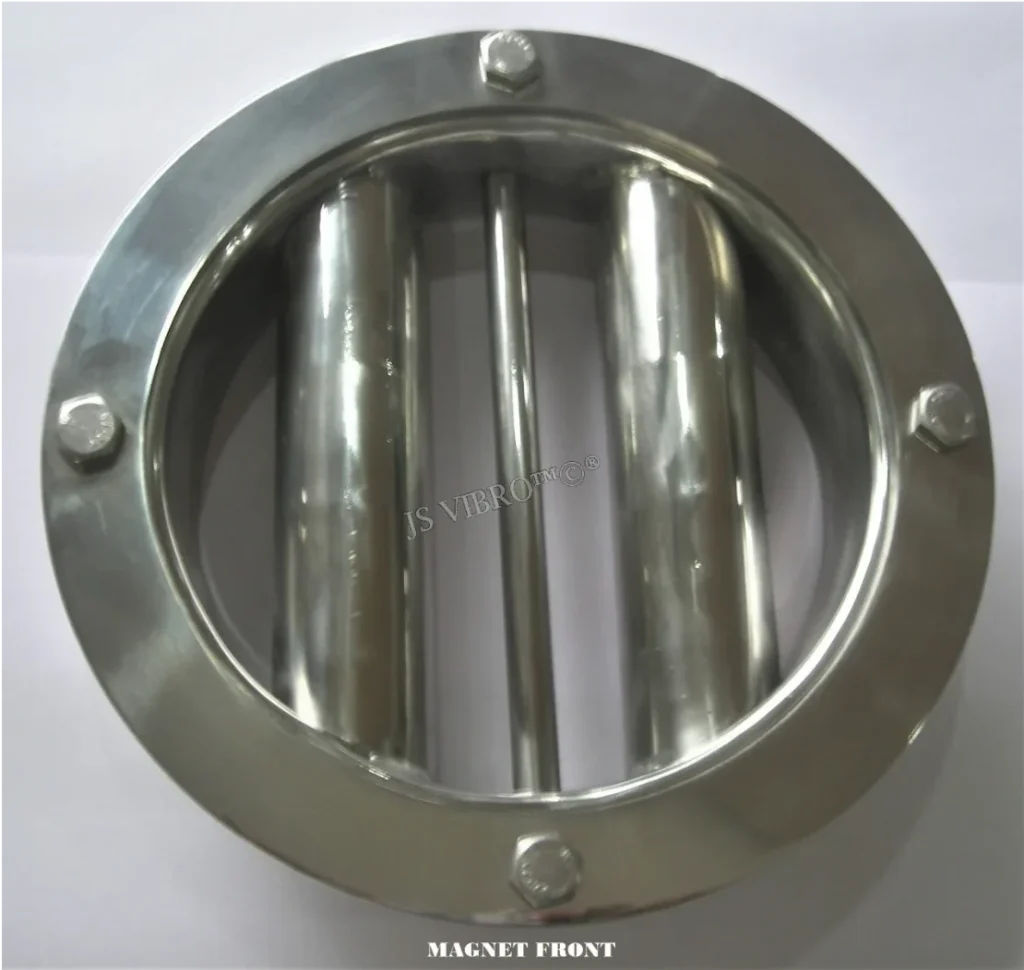
A magnet grill at the fines outlet catches iron particles from worn equipment or raw material before the product reaches packing. It is common in food, pharma and chemical plants.
Contact parts: SS 304 or SS 316?
Every part that touches the product (lid, rings, mesh, decks and outlets) is made in stainless steel. SS 304 suits most food and general chemical work. SS 316 contains 2–3% molybdenum, which gives better resistance to chlorides and acids, so it is the usual choice for pharma and corrosive products. Non-contact parts such as the base can be mild steel or stainless steel. Read more in stainless steel vibro sifter benefits and our guide to GMP vibro sifters for pharma.
Spare parts to keep in stock
- Spare screens in each mesh size you use
- A full set of gaskets
- Cleaning balls for the ball tray
- One clamp band
- Rubber mounts or springs
- Motor bearings, for sifters that run around the clock
JS Vibro keeps screens, gaskets, rings, mounts and other spares ready for its machines. Tell us your sifter size and mesh, and we will quote the parts or a complete vibro sifter.
Frequently asked questions
What are the main parts of a vibro sifter?
The vibratory motor with its eccentric weights, the base, the springs or rubber mounts, the screen decks (mesh, frame ring, gasket and clamp), the lid with its inlet, and the discharge outlets. Ball trays and magnet grills are common options.
Which part of a vibro sifter creates the vibration?
The vibratory motor in the base. Eccentric weights on the top and bottom of its shaft make the screen gyrate and tilt at the same time, which spreads material across the mesh and moves it to the outlets.
Why does a vibro sifter have springs?
The springs or rubber mounts let the screen body vibrate freely while stopping most of the vibration from reaching the floor and nearby machines.
What is a ball tray in a vibro sifter?
A perforated tray fitted under the mesh that holds rubber or silicone balls. As the sifter vibrates, the balls bounce against the underside of the mesh and knock out particles that would otherwise block it.
Which parts of a vibro sifter are SS 316?
On pharma and corrosive duties, every part that touches the product: lid, screen rings, mesh, decks and outlets. SS 304 is common for food and general chemicals. Non-contact parts can be mild steel or SS.
Which spare parts should I keep in stock?
Spare screens in the mesh sizes you use, a set of gaskets, cleaning balls, a clamp band and rubber mounts. Motor bearings are worth keeping for plants that run the sifter around the clock.


