

Screen blinding is when particles plug the openings of a vibro sifter mesh, so less material passes through and output drops. It is usually caused by near-size particles wedging in the openings, moisture or oil making powder stick, or static. The common fixes are ball or ring cleaning trays, ultrasonic screens, a better-chosen mesh, a drier feed and proper earthing.
This guide explains how to spot blinding, what causes it and how to stop it. For machines with anti-blinding options, see our vibro sifter page.
Signs your screen is blinding
- Output falls while the feed rate stays the same.
- Good product starts leaving through the oversize outlet.
- Material piles up on the screen instead of spreading.
- You can see a coating or plugged areas when you open the deck.
What causes blinding
| Cause | What happens |
|---|---|
| Near-size particles | Particles about the size of the opening wedge into it and stay there |
| Moisture or oil | Fine powder sticks to the wire and bridges the openings |
| Static | Light, dry powders cling to the mesh |
| Very fine mesh | Smaller openings plug faster, especially below about 100 mesh |
| Overloading | A thick bed presses particles into the openings |
Fix 1: ball or ring cleaning trays
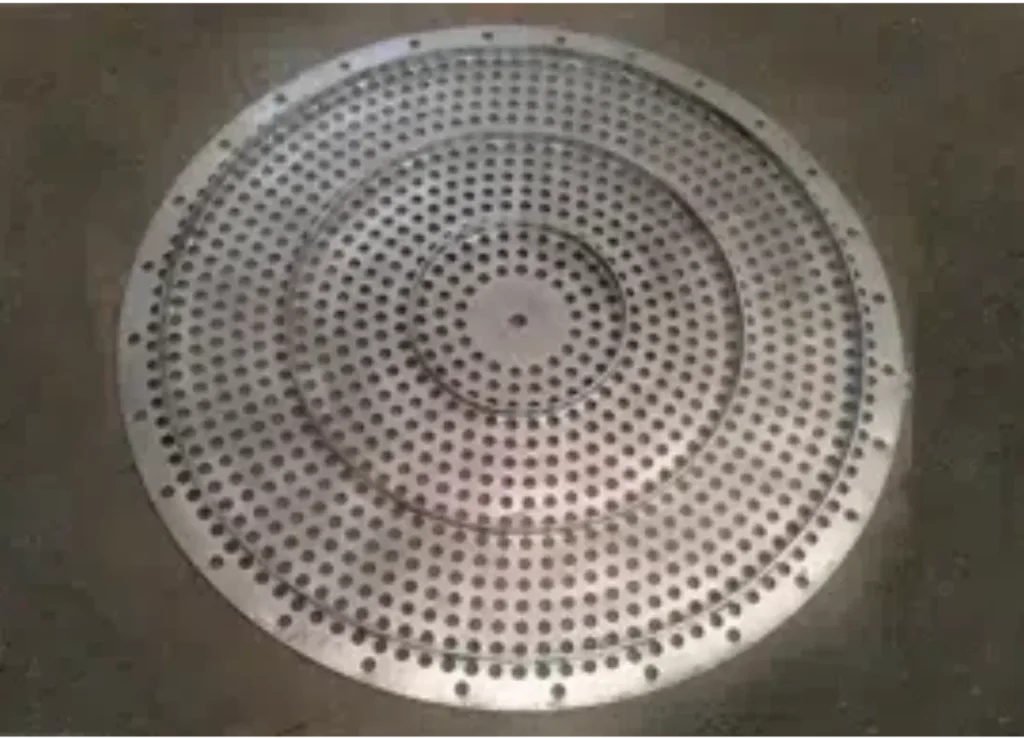
A perforated tray under each screen holds rubber or silicone balls (or rings). As the sifter vibrates, they bounce against the underside of the mesh and knock trapped particles free. It is the simplest and most common fix.
Fix 2: ultrasonic screens
An ultrasonic system adds high-frequency vibration to the mesh itself. Particles cannot settle in the openings, which keeps very fine meshes clear. It suits fine pharma, food and chemical powders that blind even with ball trays.
Fix 3: choose the right mesh
If most of the product is close to the opening size, a slightly different mesh, or a different wire diameter, can reduce wedging. See how to choose the right mesh size.
Fix 4: dry the feed and control static
- Keep moist or hygroscopic material dry before sifting, or sift it before it picks up moisture.
- Earth the sifter and outlets so static can drain away.
- Avoid feeding warm, oily material until it has cooled.
Fix 5: feed at the right rate
A thin, even layer separates better and blinds less than a thick bed. Lower the feed rate or use a larger diameter; our guide to vibro sifter capacity explains sizing.
Clean blinded screens safely
Stop and isolate the sifter, remove the screen and clean it from the underside with a soft brush or by washing. Do not hit or poke the mesh: dents and loose wires ruin its accuracy.
Frequently asked questions
What is screen blinding in a vibro sifter?
It is when particles plug the mesh openings, so less material passes through and the sifter loses capacity and accuracy.
How do ball trays stop blinding?
Rubber or silicone balls under the mesh bounce against it as the sifter vibrates and knock trapped particles free.
When do I need an ultrasonic vibro sifter?
When very fine powders keep blinding fine meshes even with ball trays.
Can moisture cause blinding?
Yes. Damp or oily powder sticks to the wire and bridges the openings.
How should I clean a blinded screen?
Remove it, clean from the underside with a soft brush or water, and never hit or poke the mesh.


