

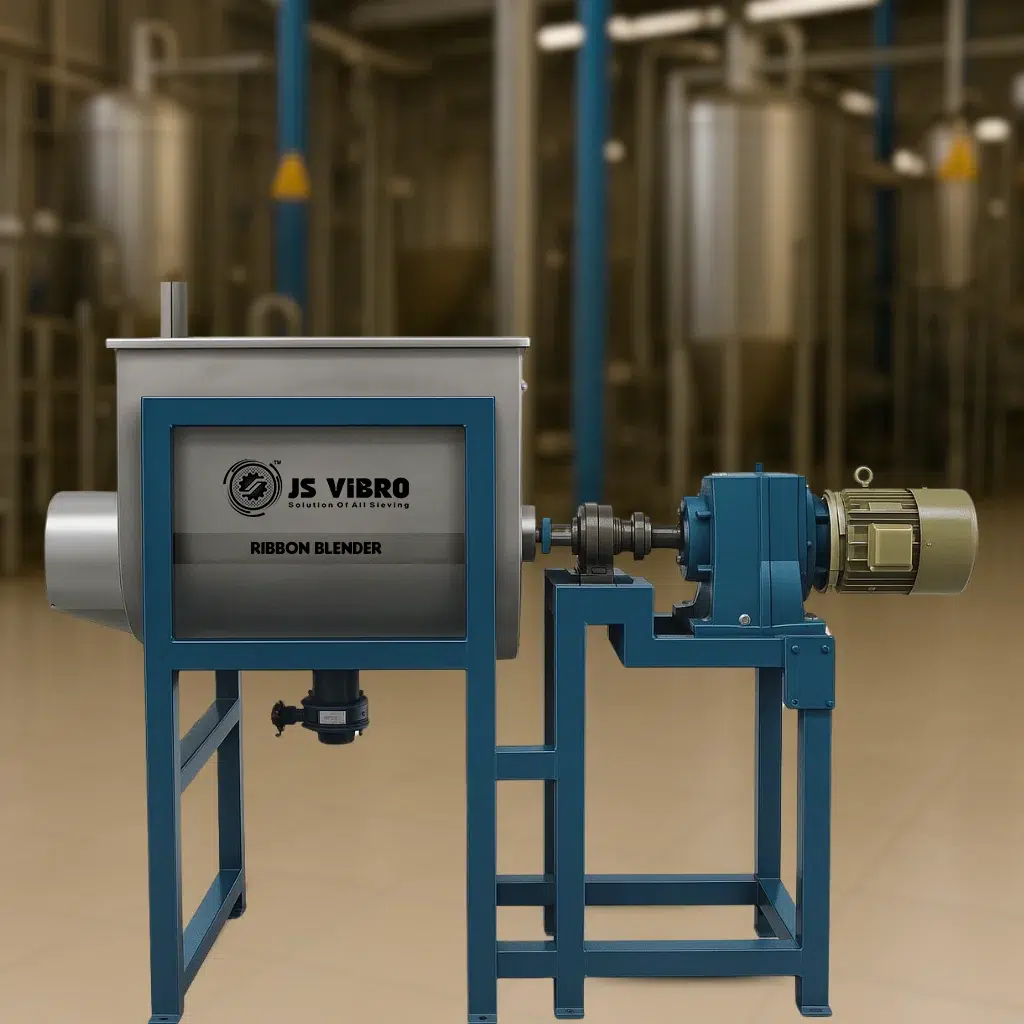
Ribbon Blender Applications in the Pharmaceutical Industry
The pharmaceutical industry operates under some of the most stringent quality, safety, and regulatory standards in the world. Every stage of production—from raw material handling to final dosage form demands accuracy, consistency, and reliability. Among the many critical processes involved, uniform mixing plays a decisive role in ensuring drug efficacy and patient safety. This is where the Ribbon Blender has become an essential piece of equipment in pharmaceutical manufacturing.
Ribbon blenders are widely used for efficient, homogeneous mixing of dry powders, granules, and solid formulations. Their proven design, scalability, and compliance with Good Manufacturing Practices (GMP) make them ideal for pharmaceutical applications. This article explores the key applications, benefits, and importance of ribbon blenders in the pharmaceutical industry.
Importance of Uniform Mixing in Pharmaceutical Manufacturing
Uniform mixing is fundamental to pharmaceutical product quality. Inconsistent blending can lead to dosage variation, reduced therapeutic effectiveness, and even safety risks for patients. Regulatory authorities require manufacturers to demonstrate that every dose contains the correct proportion of active pharmaceutical ingredients (APIs) and excipients.
Ribbon blenders ensure blend uniformity by creating a controlled mixing environment where materials are evenly distributed throughout the batch. This consistency helps manufacturers meet regulatory requirements while maintaining high product quality.
What Is a Ribbon Blender and Why It’s Ideal for Pharma Use
A ribbon blender is a horizontal mixing machine consisting of a U-shaped trough and a central shaft fitted with inner and outer helical ribbons. These ribbons move materials in opposite directions—one pushing material toward the center and the other toward the ends—creating a thorough and efficient mixing action.
This design is especially suitable for pharmaceutical applications because it:
- Provides gentle yet effective mixing
- Minimizes particle degradation
- Handles both free-flowing and cohesive powders
- Ensures repeatable and predictable results
Common Pharmaceutical Applications of Ribbon Blenders
Ribbon blenders are used at multiple stages of pharmaceutical production, including:
- Dry powder blending
- Pre-mixing of APIs and excipients
- Granule blending before compression
- Lubricant mixing
- Bulk formulation preparation
Their versatility allows them to support both small-batch R&D operations and large-scale commercial manufacturing.
Handling Active Pharmaceutical Ingredients (APIs) Safely
APIs are often potent, sensitive, and expensive materials. Safe handling is critical to protect both the product and the operators. Ribbon blenders used in pharmaceutical plants are designed with enclosed systems that minimize dust generation and product loss.
Advanced sealing options, dust-tight covers, and controlled discharge mechanisms help prevent cross-contamination while ensuring operator safety. This controlled environment is especially important when handling high-potency APIs.
Role of Ribbon Blenders in Tablet Manufacturing
Tablet production relies heavily on uniform powder blends. Before compression, APIs must be evenly distributed with fillers, binders, and disintegrants to ensure consistent tablet weight and potency.
Ribbon blenders are commonly used to:
- Blend granules prior to tablet compression
- Mix lubricants such as magnesium stearate
- Prepare final blends for high-speed tablet presses
Their ability to produce uniform blends in relatively short mixing times makes them a preferred choice in tablet manufacturing lines.
Applications in Capsule Filling Operations
Capsule filling requires powders with consistent flow properties and uniform composition. Any variation in the blend can result in under-filled or over-filled capsules.
Ribbon blenders help achieve:
- Even API distribution
- Improved powder flow
- Consistent capsule weights
By delivering homogeneous blends, ribbon blenders support accurate dosing and smooth capsule filling operations.
Use of Ribbon Blenders in Ointment and Semi-Solid Pre-Mixing
Although ribbon blenders are primarily used for dry mixing, they also play a role in semi-solid production processes. In many cases, dry powders are pre-mixed before liquid binders or bases are added in downstream equipment.
This pre-mixing step ensures:
- Even dispersion of solids
- Reduced processing time
- Improved consistency in final semi-solid products
Hygienic Design and GMP Compliance
Pharmaceutical ribbon blenders are manufactured with hygiene and compliance in mind. They are typically constructed from high-grade stainless steel with smooth, polished surfaces to prevent material buildup.
Key GMP-friendly features include:
- Easy access for cleaning
- Minimal crevices and dead zones
- Compatibility with cleaning validation protocols
These features make ribbon blenders suitable for regulated pharmaceutical environments.
Customization for Pharmaceutical Processes
No two pharmaceutical products are exactly the same. Ribbon blenders can be customized to meet specific process requirements, such as:
- Variable speed drives for precise control
- Special shaft seals for containment
- Customized discharge valves
- Integration with automated systems
Customization ensures optimal performance for specific formulations and production scales.
Advantages of Ribbon Blenders Over Other Mixing Equipment
Compared to other mixing technologies, ribbon blenders offer several advantages in pharmaceutical applications:
- Faster and more uniform mixing
- Lower energy consumption
- Simple operation and maintenance
- Scalability for future growth
These benefits contribute to improved process efficiency and reduced operational costs.
Cleaning, Validation, and Maintenance Considerations
Cleaning and validation are critical aspects of pharmaceutical manufacturing. Ribbon blenders are designed for easy dismantling and cleaning, supporting both manual cleaning and automated clean-in-place (CIP) systems.
Proper maintenance ensures:
- Long equipment life
- Consistent performance
- Compliance with audit requirements
Routine inspection and documentation also simplify regulatory inspections.
Enhancing Productivity and Process Efficiency
By delivering consistent blends, reducing batch failures, and minimizing downtime, ribbon blenders significantly enhance overall productivity. Manufacturers benefit from:
- Reduced rework and waste
- Faster batch turnaround
- Improved scalability
These advantages make ribbon blenders a valuable long-term investment for pharmaceutical companies.
Why JS Vibro for Ribbon Blender Machine is best for Pharmaceutical Industry?
JS Vibro is the preferred choice for ribbon blender machines in the pharmaceutical industry due to GMP-compliant design, precision mixing, robust construction, and customizable solutions. Our ribbon blenders ensure uniform blends, safe API handling, easy cleaning, and reliable performance that meets strict regulatory and quality standards.


